
Stress Level CheckerRisk & Level Calculator (Life Events + Current Stress)
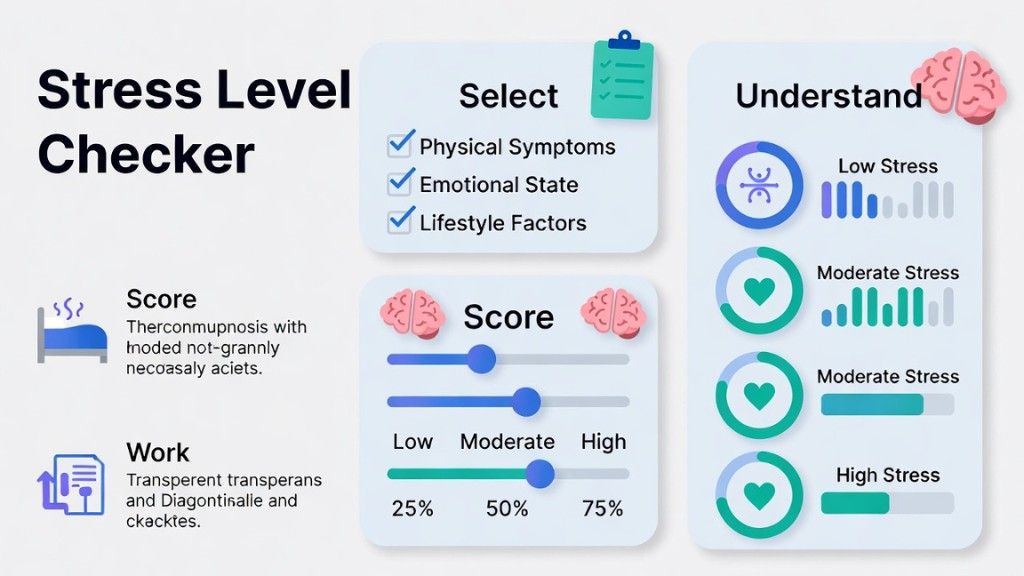
Stress Awareness & Assessment Tool
Any change in life—positive or negative—can create stress. This non-diagnostic tool helps you understand stress exposure and current stress level using scientifically accepted methods for awareness and education only.
Level 1: Life Events Stress (Past 12 Months)
Check all events that apply to you in the last year.
Level 2: Current Stress (Last 2 Weeks)
Choose how often each statement applies to you.
Feeling anxious or overwhelmed
Sleep problems or fatigue
Difficulty concentrating
Work or daily pressure
Your Stress Assessment Result
This visualization provides an overview of your stress exposure and current stress level based on your responses.
Life Events Stress Exposure
Current Stress Level
Understanding Your Results
Recent life changes combined with your current stress responses suggest how stress may be affecting your well-being. Early stress management can significantly reduce long-term health impact.
Stress Level Checker: Understand Stress, Cortisol, and Common Stress Symptoms
Stress Awareness & Education Tool
Understanding Stress Symptoms, Cortisol, and Healthy Awareness Practices
Stress is a natural response to change, pressure, or demanding situations. While short-term stress can help the body stay alert, long-term or unmanaged stress may affect emotional balance, physical comfort, and overall well-being. A stress level checker is an educational tool designed to help individuals better understand how stress may be influencing their daily lives.
This page provides a structured overview of stress awareness using a stress level checker, along with educational information about stress symptoms, the role of cortisol, and common signs of stress. The goal is not to diagnose medical conditions, but to support awareness, self-reflection, and informed decision-making.
Stress affects people differently. Factors such as lifestyle habits, work pressure, emotional challenges, and major life changes all contribute to stress experiences. By using a stress level checker responsibly, individuals can recognize patterns, understand possible stress exposure, and consider healthier routines or professional guidance when needed.
All information on this page is presented for educational purposes only, following Google medical content and AdSense safety guidelines. It is intended to support understanding, not replace professional healthcare advice.
What Is a Stress Level Checker?
A stress level checker is an awareness-based assessment tool that helps individuals understand potential stress exposure by combining recent life events and current stress indicators. These tools are commonly used in educational and wellness settings to promote stress awareness.
They do not diagnose illness or predict medical outcomes. Instead, they provide a general overview of how stress may be present in daily life, encouraging users to reflect on habits, routines, and emotional well-being.
Common Stress Symptoms
Stress symptoms can appear in physical, mental, or behavioral forms. Common examples include fatigue, difficulty sleeping, headaches, muscle tension, irritability, reduced concentration, and emotional exhaustion.
Some individuals may notice appetite changes or decreased motivation. Stress symptoms vary widely between individuals and may change over time. Experiencing these symptoms does not automatically indicate a medical condition, but recognizing them early can help support healthier stress management and lifestyle awareness.
Stress, Cortisol, and the Body
Stress activates the body's natural response system, leading to the release of cortisol, a hormone that supports alertness and energy regulation. Cortisol plays an important role in normal body function.
However, prolonged stress exposure may contribute to high cortisol levels, which can be associated with sleep disruption, fatigue, and emotional imbalance. Educational stress tools help users understand how stress responses work and why balance and recovery are important for overall well-being.
Signs of Stress and High Cortisol Levels
Some signs of stress linked to ongoing stress exposure may include restlessness, persistent tension, difficulty relaxing, poor sleep quality, and reduced focus.
Individuals experiencing prolonged stress may also feel mentally drained or emotionally overwhelmed. These signs do not confirm medical conditions, but they highlight the importance of stress awareness, routine evaluation, and healthy coping strategies.
How to Use the Stress Level Checker
To use the stress level checker, select any major life events that occurred in the past 12 months and answer questions about recent stress experiences honestly. After submission, the tool displays a stress overview and explanation.
For best results, complete the assessment in a calm environment and answer based on personal experience. This tool is designed to support awareness and self-reflection, not clinical diagnosis.
Educational Resources & References
Stress Calculator – Diley Ridge Medical Center
Stress Calculator – Diley Ridge Medical CenterExample of a life events stress assessment tool
Additional Stress Awareness Tests
Test Your Stress – Be Mindful Online Stress Test for Adults – Clinical Partners Stress Awareness Test – HedepyRelated Internal Resource
Global Wellbeing Index – LafzNewsGlobal wellbeing and lifestyle research overview
These resources are provided for educational reference only, not as endorsements.
⚠️ Medical & Legal Disclaimer
This stress level checker and related content are provided for educational and awareness purposes only. They do not diagnose, treat, or prevent any medical condition.
The information presented here follows Google EEAT (Experience, Expertise, Authoritativeness, Trustworthiness) guidelines for medical content and complies with AdSense policies for health-related websites.
This content is not medical advice and should not be used as a substitute for professional healthcare consultation. Individual stress experiences vary, and what works for one person may not be appropriate for another.
If stress is persistent, severe, or affecting daily functioning, consult a qualified healthcare professional for personalized evaluation and guidance.
Educational Stress Awareness Summary
Share this educational resource to promote stress awareness and informed decision-making.